West Texas Gypsum Country Town
Welcome to Rotan, a Fisher County city on the Double Mountain Fork of the Brazos, where agriculture and gypsum have long anchored the local economy.
Rotan is a city in northwestern Fisher County, Texas, at the intersection of State highways 70 and 92 near the Double Mountain Fork of the Brazos River. The community predates the county's organization in 1886 and was first known as White Flat, a name drawn from the powdery white gypsum sand that lies near the surface of the surrounding land. When the Texas Central Railroad extended its line west in 1906, it selected White Flat as its terminus, and the first train arrived that October, triggering a rush of lot sales and rapid commercial growth. The railroad-era settlement took the name Rotan in 1907 when a post office application revealed that another Texas community already carried the White Flat name. A gypsum processing plant opened in 1923 and was later acquired and expanded by National Gypsum in 1935, becoming one of the largest facilities of its kind and giving the town a durable industrial employer alongside its agricultural base. Cotton, grain, and cattle ranching shaped the surrounding countryside, and Rotan grew into a regional commercial center for northwest Fisher County through the middle decades of the twentieth century. Today Rotan has a population of about 1,330, down from its mid-century peak as the broader West Texas economy shifted. The town remains the commercial and civic heart of its rural area, with Rotan ISD serving local students and the gypsum plant still anchoring employment. Residents value the community's quiet, agricultural pace, its wide-open setting near the Double Mountain Fork of the Brazos, and its role as a long-lived West Texas county town. For families tied to agriculture, the gypsum industry, or the broader regional economy, Rotan offers a stable and unpretentious home base.
Rotan is located in northwestern Fisher County, in west-central Texas, at the intersection of State highways 70 and 92 near the Double Mountain Fork of the Brazos River. The town is the principal community of the surrounding rural area.
Rotan is known for its gypsum processing industry, anchored by a plant that opened in 1923 and was expanded by National Gypsum, and for its agricultural base of cotton, grain, and cattle. The town grew rapidly after the Texas Central Railroad arrived in 1907.
Rotan was originally called White Flat, a name drawn from the powdery white gypsum sand near the surface of the land. The name was changed to Rotan in 1907 when a post office application revealed another Texas community already used the White Flat name.
Rotan Independent School District serves the city. It is a rural Fisher County district that operates a single campus enrolling roughly 270 students, providing pre-kindergarten through twelfth grade within the community so that students attend school close to home.
Rotan lies near the Double Mountain Fork of the Brazos River in northwestern Fisher County. The river, along with the surrounding ranch and farm country, defines the area's geography and its agricultural economy.
City Guide
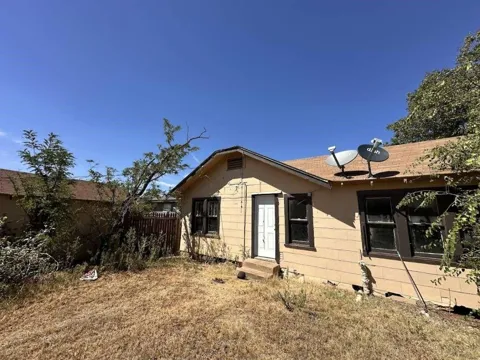
Rotan's housing stock reflects its growth as an early-1900s railroad town and its later role as a small regional center. The compact city holds a mix of early-20th-century homes near the downtown core and mid-century single-family residences on wide, tree-lined streets, with the surrounding area opening into farmland and ranchland. Because the population has declined from its mid-century peak, the housing market is characterized by established, readily available homes rather than new large-scale subdivisions. The overall character is that of a settled West Texas town offering low-density, single-family living at a modest scale.
Rotan's layout centers on a compact downtown commercial district near the old railroad alignment, with residential streets extending outward toward the school and civic buildings. The blocks closest to downtown contain many of the town's oldest homes, while the outer streets transition to a more open, semi-rural feel. The city's small size means most residents live within a short distance of the school, churches, and businesses, preserving the close-knit character typical of a West Texas county town rather than a landscape of distinct named subdivisions.
Life in Rotan is quiet and rooted in the working rhythms of West Texas agriculture and industry. The gypsum plant and the surrounding farms and ranches provide the community's economic backbone, while schools, churches, and civic events form its social center. The town's pace is unhurried, and its identity is tied to a long history as a railroad-era commercial hub for northwest Fisher County. Residents take pride in the town's resilience through economic shifts and value the close-knit, unpretentious character that comes with living in a small West Texas county town.
Rotan is served by the Rotan Independent School District, a rural Fisher County district that operates a single campus enrolling roughly 270 students. The one-campus arrangement provides pre-kindergarten through twelfth grade in one location, keeping education close to home and giving the school a central place in community life. Small enrollment supports close relationships between families, students, and staff. For specialized services or higher education, residents can reach larger institutions in Abilene and the surrounding West Texas region.
Rotan sits at the junction of State Highway 70 and State Highway 92, giving the town direct connections across the surrounding ranch and farm country of northwest Fisher County. The community's founding was itself a transportation event, as the Texas Central Railroad made White Flat its western terminus in 1906, with the line built through town the following year; passenger service later ended and the rail line was discontinued in the late 1970s. Today the two state highways carry the town's freight and commuter traffic, linking Rotan to neighboring county seats and the wider West Texas highway network.
Recreation in Rotan is tied to the open country around it. The Double Mountain Fork of the Brazos River runs near the city, and the surrounding ranchland supports hunting, fishing, and other rural pastimes common to West Texas. Community life centers on school athletics and civic gatherings, and the town's annual and seasonal events draw neighbors from across northwest Fisher County. The wide-open landscape and dark skies of the region offer a contrast to more congested parts of the state, appealing to residents who value space and the outdoors.
MARKET SNAPSHOT
How homes have been selling here over the last 90 days.
Market data reflects closed sales over the last 90 days and is provided for informational purposes.
For sale
Handpicked properties hitting the scene in your area.
For sale
Handpicked properties hitting the scene in your area.
For sale
Handpicked properties hitting the scene in your area.
BROWSE BY ZIP
Browse listings by postal code in this area.